Building Code Glossary
Zone: Building Code Definition
How the IBC 2009, IFC 2009, IMC 2009, IECC 2009 define zone, where the wording differs, and which chapters depend on the term.
On this page
Last updated September 7, 2026 · Definitions quoted from the 2009 International Codes as transcribed in this site's building-codes collection, with the source chapter linked for each quotation. Usage counts are computed over the chapters hosted here, one copy per code. The [ICC code library](https://codes.iccsafe.org/codes) publishes the current model text and the [ICC adoption maps](https://www.iccsafe.org/advocacy/code-adoption-maps/) show which edition a jurisdiction has adopted; those sources control.
Direct answer
Zone is a defined term in the International Building Code (IBC) 2009, in Fire Protection Systems. The code's own words are: “A defined area within the protected premises. A zone can define an area from which a signal can be received, an area to which a signal can be sent or an area in which a form of control can be executed.” The IFC 2009, IMC 2009, IECC 2009 define the same term with different wording, so the controlling text depends on which code governs the question in front of you — the comparison below sets the versions side by side. The term is used in 45 chapters of this corpus, most often in Commercial Energy Efficiency (IECC 2009), Fire Protection Systems (IFC 2009), Fire Protection Systems (IBC 2009). These pages transcribe the 2009 model text; verify the definition against the edition and amendments your authority having jurisdiction has adopted.
Content and cited inputs reviewed by Scott Barrington, Harth founder and architectural technology specialist · Published 2026-09-07 · Updated 2026-09-07.
What does this term mean?
Zone — IBC 2009, Fire Protection Systems:
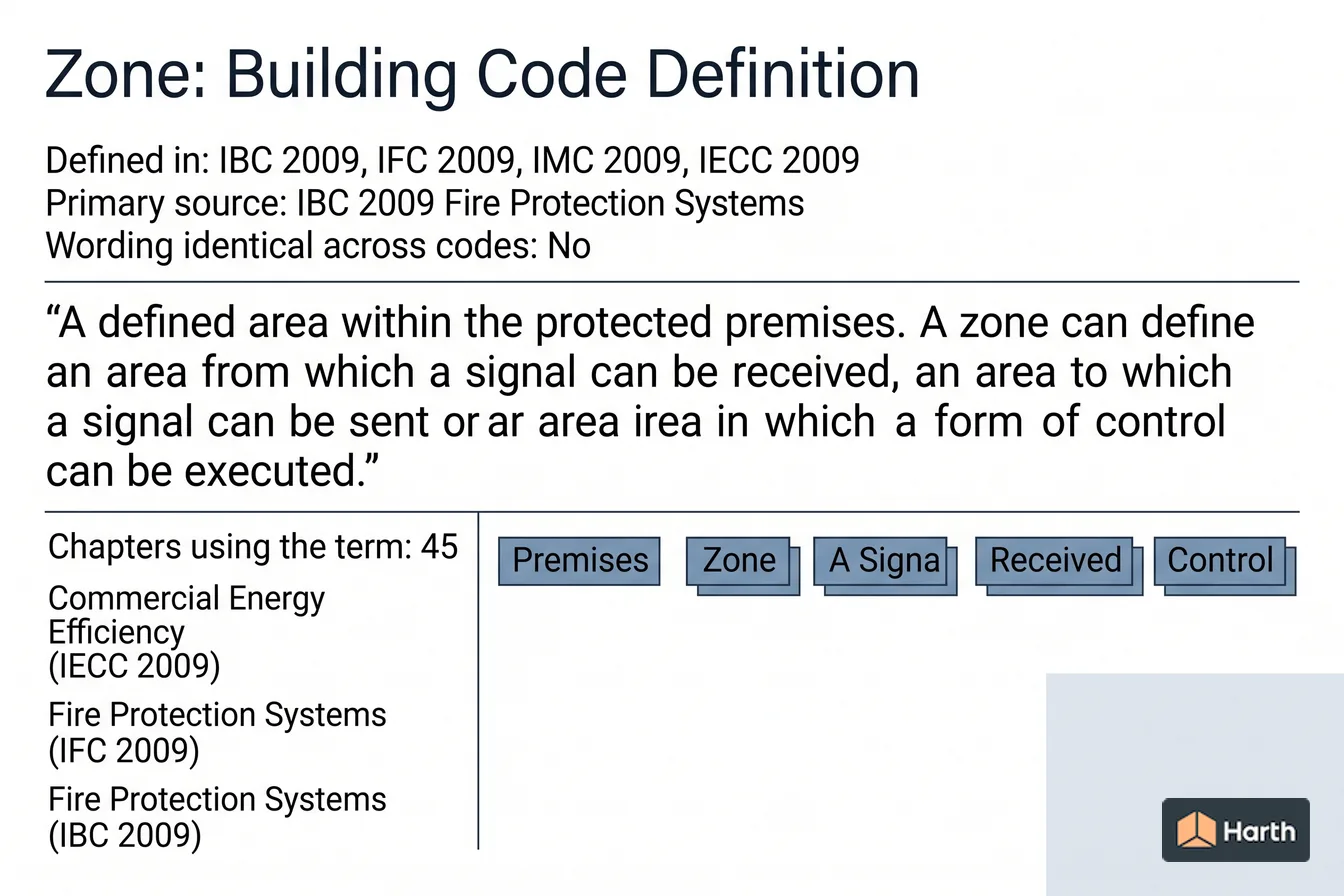
A defined area within the protected premises. A zone can define an area from which a signal can be received, an area to which a signal can be sent or an area in which a form of control can be executed.
What must be verified before using this guidance?
Four of the I-Codes in this corpus define Zone, and the wording is not identical — read the version that governs your question.
| Code | Where it is defined | Definition |
|---|---|---|
| IBC 2009 | Fire Protection Systems | A defined area within the protected premises. A zone can define an area from which a signal can be received, an area to which a signal can be sent or an area in which a form of control can be executed. |
| IFC 2009 | Fire Protection Systems | A defined area within the protected premises. A zone can define an area from which a signal can be received, an area to which a signal can be sent or an area in which a form of control can be executed. |
| IMC 2009 | Definitions | One occupiable space or several occupiable spaces with similar occupancy classification (see Table 403.3), occupant density, zone air distribution effectiveness and zone primary airflow rate per unit area. |
| IECC 2009 | Definitions | A space or group of spaces within a building with heating or cooling requirements that are sufficiently similar so that desired conditions can be maintained throughout using a single controlling device. |
Where zone is used in the code
The term appears in 45 chapters of the 2009 I-Codes hosted here. The chapters that lean on it hardest are the ones to read next.
| Chapter | Code | Mentions |
|---|---|---|
| Commercial Energy Efficiency | IECC 2009 | 189 |
| Fire Protection Systems | IFC 2009 | 89 |
| Fire Protection Systems | IBC 2009 | 80 |
| Ventilation | IMC 2009 | 77 |
| Highly Toxic and Toxic Materials | IFC 2009 | 62 |
| Building Planning | IRC 2009 | 37 |
| Structural Design | IBC 2009 | 27 |
| Building Services and Systems | IFC 2009 | 25 |
| Exhaust Systems | IMC 2009 | 23 |
| Residential Energy Efficiency | IECC 2009 | 21 |
| Accessibility | IBC 2009 | 20 |
| Energy Efficiency | IRC 2009 | 18 |
33 further chapters mention the term.
The term in use
How the code actually writes about zone, quoted from the 2009 text hosted here:
The bUilding thermal envelope shall meet the requirements of Tables 502.2(1) and 502.3 based on the climate zone specified in Chapter 3.
Each floor shall be zoned separately and a zone shall not exceed 22,500 square feet (2090 m2).
Ventilation supply systems shall be designed to deliver the required rate of outdoor airflow to the breathing zone within each occupiable space.
The terms zone is built out of
The definition above leans on 5 other defined terms. Each carries its own code definition, and a local amendment to any of them changes what zone covers:
- Occupancy Classification — IFC 2009: For the purposes of this code, certain occupancies are defined as follows:
- Occupiable Space — IBC 2009: A room or enclosed space designed for human occupancy in which individuals congregate for
- Occupancy — IMC 2009: The purpose for which a building, or portion thereof, is utilized or occupied.
- Building — IBC 2009: Any structure used or intended for supporting or sheltering any use or occupancy.
- Premises — IMC 2009: A lot, plot or parcel of land, including any structure thereon.
Zone: what to open, and in what order
Every row is a document this term depends on. The ICC code library and the ICC adoption maps cover the middle rows.
| Check | Where | Confirmed |
|---|---|---|
| Read the definition in the adopted IBC | Fire Protection Systems | |
| Read the definition in the adopted IFC | Fire Protection Systems | |
| Read the definition in the adopted IMC | Definitions | |
| Read the definition in the adopted IECC | Definitions | |
| Re-check the requirement that uses it | Commercial Energy Efficiency (IECC 2009) | |
| Re-check the requirement that uses it | Fire Protection Systems (IFC 2009) | |
| Re-check the requirement that uses it | Fire Protection Systems (IBC 2009) | |
| Re-check the requirement that uses it | Ventilation (IMC 2009) | |
| Confirm the dependent definition | Occupancy Classification | |
| Confirm the dependent definition | Occupiable Space | |
| Confirm the dependent definition | Occupancy | |
| Local amendment to any of the above | Jurisdiction's amendment list |
A research aid, not a code determination. The authority having jurisdiction decides which edition and which amendments apply.
Where can you explore related guidance?
- Explore all glossary guidance
- Occupancy Classification: Building Code Definition
- Occupiable Space: Building Code Definition
- Occupancy: Building Code Definition
- Premises: Building Code Definition
Sources and method
Definitions quoted from the 2009 International Codes as transcribed in this site's building-codes collection, with the source chapter linked for each quotation. Usage counts are computed over the chapters hosted here, one copy per code. The ICC code library publishes the current model text and the ICC adoption maps show which edition a jurisdiction has adopted; those sources control.
Source links
Frequently asked questions
What is the code definition of zone?
The International Building Code (IBC) 2009 defines it in Fire Protection Systems as: “A defined area within the protected premises. A zone can define an area from which a signal can be received, an area to which a signal can be sent or an area in which a form of control can be executed.” The 2009 model text is reproduced here; the definition that binds your project is the one in the edition your jurisdiction has adopted, as amended locally.
Do the I-Codes define zone the same way?
No. IBC 2009, IFC 2009, IMC 2009, IECC 2009 all define the term, but the wording is not identical, and a difference in wording can change which requirements are triggered. The comparison table above sets the versions side by side so you can read the one that governs your question.
Which parts of the code depend on zone?
In this corpus the term is used across 45 chapters, led by Commercial Energy Efficiency in the IECC 2009. Those are the sections whose scope moves if the definition is amended locally, so read them together with Chapter 2 rather than on their own.
What are zoning and building codes?
Building is a separate defined term. The IBC 2009 defines it as: “Any structure used or intended for supporting or sheltering any use or occupancy.” That is not the same as zone, which the IBC 2009 defines as “A defined area within the protected premises. A zone can define an area from which a signal can be received, an area to which a signal can be sent or an area in which a form of control can be …” — read both before applying either, and confirm the wording in the edition your jurisdiction has adopted.
Related pages
- Wood/plastic Composite: Building Code Definition
Wood/plastic Composite — IRC 2009 definition: A composite material made primarily from wood or cellulose-based materials and plastic.
- Wood Structural Panel: Building Code Definition
Wood Structural Panel — IBC 2009 definition: A panel manufactured from veneers, wood strands or wafers or a combination of veneer and wood …
- Workstation: Building Code Definition
Workstation — IBC 2009 definition: A defined space or an independent principal piece of equipment using HPM within a fabrication area …
- Wythe: Building Code Definition
Wythe — IBC 2009 definition: Each continuous, vertical section of a wall, one masonry unit in thickness.
- Yard: Building Code Definition
Yard — IBC 2009 definition: An open space, other than a court, unobstructed from the ground to the sky, except where …
- Zone, Notification: Building Code Definition
Zone, Notification — IBC 2009 definition: An area within a building or facility covered by notification appliances which are activated simultaneously.