Resources
What Changed Between Code Editions
Edition-to-edition changes in the I-Codes — the 2018, 2021 and 2024 IBC and the 2021 IECC — with the sections that moved, the numbers that changed, and a repeatable method for comparing any two editions.
On this page
A jurisdiction moving from one code edition to the next does not change everything, and it rarely changes the thing you remember. The changes that matter to a design team are a short list per edition, and they are usually structural rather than numerical: a construction type is added, a table is restructured, a compliance path is renamed. Those are the changes that break an old habit rather than an old drawing.
These pages cover the edition transitions currently in play across US jurisdictions, focused on the provisions that change how a scheme is drawn — occupant load factors, construction types, allowable heights, energy compliance paths. Each change is tied to the section that carries it and to a published source, so it can be checked rather than believed.
They are not a substitute for the code-change record. ICC publishes a Significant Changes volume and code-change monographs for each edition, and a jurisdiction's own adopting ordinance may amend any of it. Use these pages to know what to look for; use the adopted edition to know what applies.
Prepared by Harth as generated collection navigation. Evidence and review scope are recorded on each linked page.
Pages
- How to Compare Two Building Code Editions Without Missing Anything
- IBC 2015 to 2018: The Changes That Move a Drawing
- IBC 2018 to 2021: Mass Timber and the New Construction Types
- IBC 2021 to 2024: What Changed for Design Teams
- IECC 2018 to 2021: How Much More Efficient, and What Changed
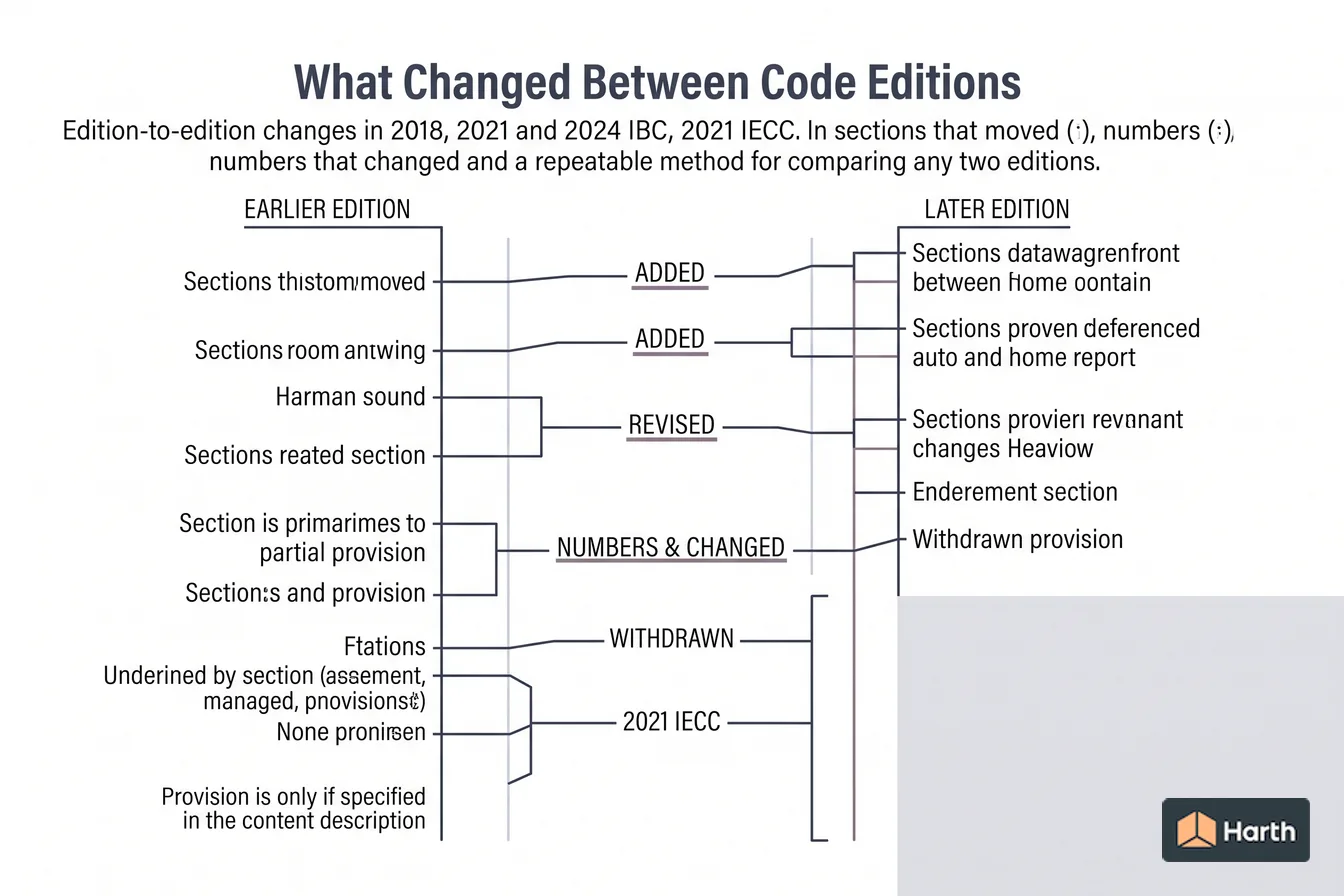
- How to Compare Two Building Code Editions Without Missing Anything
A five-step method for comparing code editions: adoption record, then definitions, then your tables, then numbering, then local amendments — in that order, and why.
- IBC 2015 to 2018: The Changes That Move a Drawing
IBC 2015 → 2018: the business occupant load factor moved from 100 to 150 sq ft gross, and a concentrated business use category at 50 sq ft net was added.
- IBC 2018 to 2021: Mass Timber and the New Construction Types
IBC 2018 → 2021: three new mass timber construction types (IV-A, IV-B, IV-C) in §602.4, heavy timber renamed IV-HT, up to 18 storeys, with changes across five more chapters.
- IBC 2021 to 2024: What Changed for Design Teams
IBC 2021 → 2024: tornado loads, updated wind/seismic/snow/rain design, more exposed mass timber in Type IV-B, reorganised §2702 emergency power, and Appendix P sleeping lofts.
- IECC 2018 to 2021: How Much More Efficient, and What Changed
IECC 2018 → 2021: DOE-assessed 9.4% residential and 12.1% commercial site energy savings, plus a Chapter 4 restructure that renamed and clarified the compliance paths.